For once, we’re celebrating the first arrival of a cruise ship in Santorini, on March 23. The island’s mayor was present at the port, along with locals distributing Meletinias (a local specialty made only during Orthodox Easter, a real treat) to visitors, under a radiant sun. Seajet has also begun its seasonal operations with flights connecting Santorini to other islands such as Serifos, Sifnos, and Milos. Seasonal hotels are beginning to open, as are tavernas. The freeze on bookings this winter during recent events has caused a current average drop of 25%. Everyone agrees that things will pick up again in a big way starting in June. April and May will therefore be less crowded than usual, with fewer cruise ship excursions. A great opportunity to come here for a few days to enjoy the scenery, then explore other islands; the Cycladic spring is wonderful! At the same time, work to secure certain sensitive sites is underway or planned. The scientific community hasn’t abandoned Santorini and Amorgos. All the specialists have been fascinated by this period. It’s undoubtedly one of the most studied places in the world at the moment, which is certainly a welcome change for us!
SANTORINI AIMS FOR A REVIVAL OF TOURISM. BEWARE OF FAKE NEWS…
While the Santorini Underwater Observatory (SANTORY) research team is participating in the HYDROMOX oceanographic mission (Hydrothermal Modulation of Caldera Explosivity), with the British oceanographic vessel DISCOVERY currently on site, the trend of decreasing seismic activity between Santorini and Amorgos continues to strengthen.
On March 17, a high-level meeting was held in Santorini during the visit of Olga Kefalogianni, the Minister of Tourism.
She reassured stakeholders that « Santorini remains a safe and organized destination, fully prepared to welcome travelers. » She also announced a tourism campaign and the creation of a destination management and marketing organization. She emphasized that the government had acted quickly and responsibly, in collaboration with the scientific committees that continue to closely monitor the situation. She also discussed ongoing efforts to strengthen infrastructure and update civil protection plans to ensure the safety of residents, visitors, and tourism professionals. It is encouraging to see the positive response from international markets, with interest in Santorini continuing to grow. The Minister noted the positive reception Santorini received at the ITB International Travel Fair in Berlin, highlighting the island’s enduring appeal.
At the same time, and in order to best prepare for the start of the tourist season, safety measures have been taken by ministerial decision for the coming weeks. We remind you that the areas concerned have always been places not exempt from the risk of landslides, as we have always mentioned to our travelers:
-At the Athinios ferry port and its network, it has been decided to take traffic control measures for the disembarkation of vehicles, with priority given to the disembarkation of private cars, followed by buses and trucks, so that there is no traffic load on the road, both during disembarkation and departure of the line’s ships, with the ultimate goal of reducing the time they spend there.
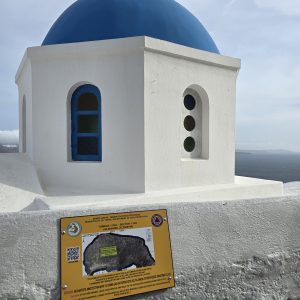
-Access to and stay in the port area of the old Port of Fira and in the upstream area that includes the cable car facilities and the 589 steps leading down are temporarily closed.
-Access to and stay in the eastern part of the small port of Armeni are temporarily closed (we have been advising against access there for about 15 years!!).
– Access to the small port of Ammoudi via the stairs from Oia is temporarily suspended (we have been advising against it since last year).
No other restrictions or bans are in place in Santorini or the affected islands.
Remember that the authorities and civil security have posted signs (in French and English) throughout the island, allowing visitors to know where to go at all times in the event of an earthquake. This is not a moment too soon; it should have been done long ago, and this example should be followed in many other high-risk destinations.
NEWS AND FAKE NEWS.
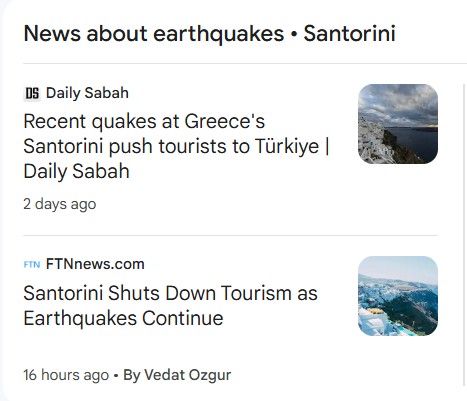
Recent online articles continue to report travel bans, prohibited activities, and an island in despair. Our Turkish neighbors are a bit of a loser and publish this kind of fake news, in order, as they themselves also write, to attract as many travelers as possible for this season.
This is a bit of a departure from the fact that Turkey is also a high-risk destination, and how dangerous it is! (see the article below).
CANCELLATION OF CRUISE SHIP ARRIVALS: EXPLANATIONS
The Celestyal company has just announced that its stopover in Santorini will be cancelled and replaced in April and May. The key to understanding this decision is that, contrary to usual practice, many cruise passengers will not be able to disembark at the old port of Fira and climb the steps by mule (the scandal) or by cable car, which are temporarily closed. The proposed solution is to organize boat shuttles to the port of Athinios, then offer a bus tour of the island for everyone. However, the ferry port will also be regulated, with increased traffic and security restrictions (see above), in line with the daily ferry arrivals. The excursions organized by these cruise companies initially take place at a brisk pace; these measures are not to the liking of these companies (which will also see their profitability decrease), who therefore prefer to dump their hordes of excursions elsewhere. OREA VOYAGES is delighted! There’s no need to dwell on this scourge and the dramatic consequences caused by these sea monsters. We’ll have a much calmer start to the season, and travelers staying there will be able to fully appreciate the destination.
ATMOSPHERE ON SITE.
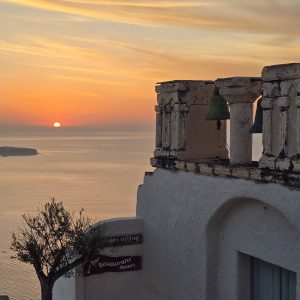
As we recently wrote, Santorini locals are preparing for the upcoming season, and life has returned to normal. Here are some videos showing the atmosphere in Oia.
Aethrio Sunset Village welcomes you back this April!
Part of the staff of the Aethrio Sunset Village is now on site preparing for the opening of our establishment.
After two months of stress and anxiety, violently accentuated by fake news, photo manipulations and media exaggerations, we are happy to confirm the arrival of our first guests on April 9!
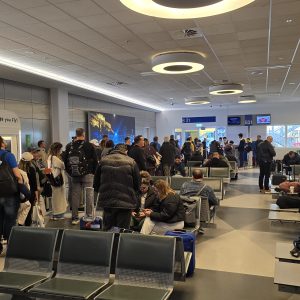
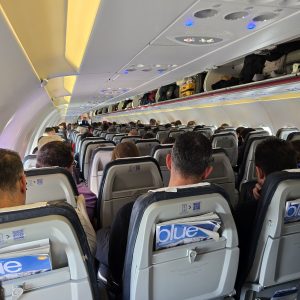
Yesterday, as the photos below show, one of the daily Athens/Santorini flights was almost full, with locals, representatives, but also many tourists who came to discover our beautiful destination at the end of winter.
There are no restrictions on movement; supermarkets, schools, some hotels, and restaurants are open. Work has resumed everywhere to complete renovations and preparations for the season.
Here is the latest information, with the opinion of a scientific expert and recommendations for visits.
Let’s not forget, however: Greece is a country at risk of earthquakes, and always has been. All foreign ministries have been mentioning this in their travel recommendations for a very long time. Whether on the mainland, in Crete, or in the Cyclades, the earth will continue to tremble. Travelers and locals alike must always be aware of this and know the basic and according reflexes. We will remind you of these in the information booklets provided in our rooms.
Your safety and comfort are our top priorities. In response to the recent events, we’ve enhanced our already established safety protocols to provide you with peace of mind during your stay. These measures include regular safety drills for our staff, clear and well-communicated emergency procedures, and easily accessible evacuation routes.
Our team knows Santorini inside and out. When we introduce you to the island at check-in, we will point out the places to avoid or those requiring the greatest caution. This is what we have always done, for a long time!
See you soon! We look forward to welcoming you!
COMING SOON : PHOTO AND VIDEOS OF THE LIFE IN SANTORINI RIGHT NOW.
Here is the translation of an article from the national channel dated today, 03/03.
« Santorini is gradually returning to normal, after the intense seismic activity of the previous weeks. Residents are gradually returning to the island, while tomorrow, Tuesday (4/3), schools will reopen.
Thousands of residents have returned to the island in recent weeks, especially after the announcement that schools will open tomorrow. While seismicity is decreasing, Santorini is preparing for the next tourist season.
Hotels, shops, restaurants and entertainment companies are carrying out the necessary work to welcome the first tourists who will arrive in March.
According to travel agents, there have been no significant number of cancellations of existing reservations, but the number of new reservations has been limited »
It is certain that these less sensational announcements will not make the headlines of the international media as has been the case in recent weeks. These worrying and alarming headlines have caused, as is often the case, a lot of harm. Knowing this phenomenon, we have always communicated on the facts, with the necessary hindsight, and we hope that this was decisive for your future decisions regarding a possible trip (planned or under consideration) to our beautiful destinations.
Let us remain cautious, far from us the idea of drawing any definitive conclusion on the situation! There will always be earthquakes in Greece, and the Santorini volcano is not extinct. There are also hurricanes and cyclones in the Caribbean, eruptions in Iceland or Italy, deadly fires in America or Australia, the list could be very long. We have written it, the risk is everywhere, we just have to take it into account and prepare accordingly for each destination considered. We will add to the travel documents of our next clients some basic rules and instructions specific to our destination.
Here is also an article from a leading newspaper in English, translatable online with Google.
Orea Voyages is preparing for a new season, we will have the opportunity to communicate later on the important recommendations and instructions that we are currently developing.
The activity continues to decrease, no conclusions to be drawn from this of course for the moment. The measurements and studies continue, more than half of the habitants who left have returned, the mini-tremors that are currently taking place are no longer felt in Santorini. If the trend is confirmed, it seems that the tourist season will start at the beginning of April. Additional security and control measures in places at risk of landslides will be implemented. As we wrote, these areas were already not recommended to our travelers. Floating platforms will also be installed in the south of the island to deal with any eventuality. The authorities are doubling their caution and prevention in order to avoid the failures that have occurred in the past in this country (deadly fires, railway insecurity, etc.). Scientists from the expert committee are now calling for reason, as foreign media and social networks tend to seek sensationalism as much as possible, and a lot of fake news is still circulating, which is putting the existence of many family businesses at risk (small hotels, tourist shops, taverns). OREA VOYAGES will therefore continue to carefully analyze the events and space out communications in order to provide new and tangible elements. The first thing we can conclude: these events will have made us realize that zero risk has never existed in Santorini and the surrounding area. Greece is shaking every day. Protection and security measures will be permanently present on site, which should have been in place since 2011 during relatively similar events. In addition, more rigorous inspections are beginning to take shape, with heavy fines imposed on owners of illegal constructions in sensitive areas such as the Caldera. If the season starts well at the beginning of April, it is even likely that attendance will be lower, which for us is a very positive point! See you in a week for another full update.
EARTHQUAKE INFO 17/02.
Here is the summary report of the scientific committee dated 16/02. This committee of experts will meet regularly in order to communicate the latest results of the studies that are continuously taking place in the area. « 1. The seismic sequence in the maritime area of Anydros, between Thira and Amorgos shows a relative decline. 2. The current seismic activity in the area of Anydros island is due to submarine faults with a NE-SW direction and is part of the broader geodynamic context of the area. According to the available data, this activity is due to a combination of tectonics and deeper magmatism. 3. The seismic activity within the caldera remains at the same levels, while an increased deformation of the ground is observed in a wider area that is constantly monitored. 4. Public buildings, according to the inspections carried out so far, have demonstrated very good behavior under seismic loads. » Professor of Geological Oceanography Evi Nomikou, however, clarifies that this does not mean that the magma is rising. « Volcanic activity should not be confused with the magmatic processes that occur in the bowels of the earth, » explains the scientist, specifying that the magmatic processes that occur in the bowels of the earth are a different phenomenon and, as she adds, they are still occurring. There are still many surveys and data to be analyzed, with measurements taking place every day. The scientific research vessel that we mentioned in previous posts has finished its measurements, and they will be studied and published soon. The next scientific report will be on 21/02. Let’s add that the return of the inhabitants of Santorini has begun a few days ago. Finally, the construction of an additional emergency evacuation port area will begin very soon, in the south of the island, at the port of Vlichada. Such a measure should have been taken a long time ago!
“WHERE THE EARTH HAS SHAKEN, IT WILL SHAKE AGAIN”. INFO 13/02
This natural law – often put forward by scientists as an important benchmark for an aspect of seismic assessment based on the identification and location of past and present earthquakes and therefore the faults that generated them – is considered a fundamental step in preventing seismic risk. When 100 predictions are made, it is certain that one or two of them will have a chance of coming true. This is somewhat the case at the moment on the subject, many media outlets obviously only retain those that cause a sensation. When we talk about several thousand earthquakes, it is important to understand that the vast majority are not felt, especially since they occur on average 15-30km from the islands concerned. This does not minimize the fact that dozens have been felt (without causing damage, we remind you), the history of Santorini implies that many inhabitants have left for the moment, the proportion is much lower for the population of Amorgos, Anafi or Ios which are just as close. To improve their ability to monitor changes in sea level, a specialized team from the Geodynamic Institute of the National Observatory of Athens installed a new tide gauge on the northeastern coast of Santorini on Monday. « This is an essential step for the early detection of tsunamis, » Marinos Charalambakis, spokesperson for the National Tsunami Warning Center and operational scientist at the Geodynamic Institute, told Kathimerini . « The newly installed station is essential for the immediate detection of changes in sea level that could indicate the formation of a tsunami, allowing the authorities to be alerted in a timely manner. » However, Charalambakis reassures: there is currently no increased risk of tsunami, as seismic activity remains below a magnitude of 5.0.
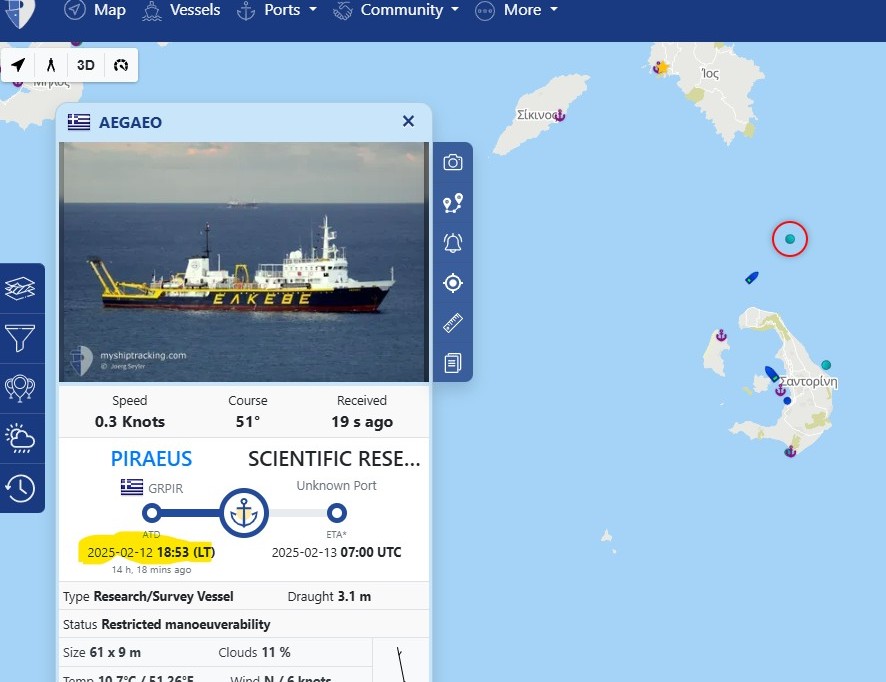
In addition, an oceanographic vessel of the Hellenic Centre for Marine Research (HCMR) « Aegean » arrived in Santorini on Thursday morning (13/2), with a large research team comprising many specialties and is expected to remain in the area between Thira and Amorgos for at least four days. According to relevant information from the Hellenic Centre for Geophysical Research, the purpose of the mission is to collect additional geological, geophysical, geochemical and oceanographic data in order to contribute to a more complete understanding of the seismic activity developing in the region. Once again, patience, science takes its time, does not speculate, and that is a good thing!
FLASH INFO EARTHQUAKES 10/02: UPDATE ON THE SITUATION, TOURIST SEASON COMING.
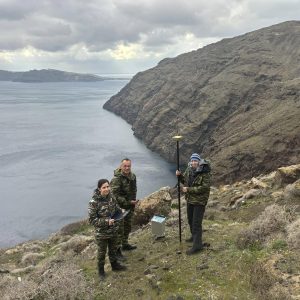
The date of 03/03 which is the scheduled lifting of the state of emergency in the southern Cyclades is not insignificant. As we have been writing since the beginning, it takes several weeks after the beginning of this sequence to understand its evolution, with irrefutable scientific data. The underwater probes installed a few days ago will soon give their first readings. Another effort is underway to provide better information and draw safe conclusions on the seismic sequence of the last few days between Santorini and Amorgos and mainly for prevention purposes. Professor of Geological Oceanography, Evi Nomikou, announced via her page on social networks – the realization of new studies, in the context of the current seismic activity. The research is a continuation of the measurements of the period 2011-2012 and is carried out by the Army Geographic Service (AGS), the Physical Geography Laboratory of the National University of Athens and the Dionysus Satellite Center of the National Technical University of Athens. The research team will carry out GNSS satellite observations at approximately 20 points on the islands of Santorini, Thirassia and Nea Kammeni, with the aim of detecting more precisely the micro-movements of the solid crust of the Earth. In addition, gravity measurements will be carried out at at least 50 points to visualize the gravitational field and detect changes over time. Photogrammetric imaging with a thermal camera via drones (Unmanned Aircraft Systems) will also be carried out in specific areas, to detect thermal fields. The agencies will continue geodetic and geophysical observations, contributing to the understanding of the seismic activity and geodynamic evolution of Santorini.
As a precautionary measure, the Greek government will soon put the MySafetyPlan application online. It is essentially a digital map that shows, FOR ALL OF GREECE (because the risk of earthquake is everywhere in this country). WHAT TO ABSOLUTELY KEEP IN MIND: no specialist can currently predict anything. The current sequence is following its course, without any significant decrease or increase in its intensity (the relative decline of the last 2 days cannot conclude with any certainty). Some are making very alarmist assumptions, others are more cautious. Those who submit the idea of a volcanic eruption have no data or study, or proof, to support this scenario. The media are hungry for sensations, so they will look anywhere for statements that will be distorted or exaggerated. As for the tourist season, it is still too early to consider postponements or cancellations. Local hoteliers are not recording more cancellations than usual. Some travelers continue to book either hotel rooms or tourist packages like our agency offers. Most know very well that cancellations without fees can generally occur up to 21 days before departure. The tourist season in the Cyclades begins at the beginning of April, we have plenty of time to wait for the first conclusions of the competent authorities. Of course, new requests are fewer, and that is quite normal. To conclude on this subject, there are even tourists who are still present in Santorini and who continue to arrive there (in very small numbers, admittedly)! See the article below. https://www.lefigaro.fr/voyages/en-chine-les-seismes-sont-bien-plus-importants-a-santorin-les-vacanciers-ne-cedent
NEWS, 07/02, 20H00
No significant developments to report today, except for a reduction in the intensity of the earthquakes since this morning. The Prime Minister visited the island of Santorini to ensure that all preventive measures were in place. Many engineers continue their rigorous analyses of potentially dangerous places (risk of landslides or landslides), in all the villages and on the cliffs. Some scientists are beginning to strongly criticize the Greek media, but also some foreign bloggers or journalists, who tend to dramatize the situation to create a sensation. In this kind of situation, calm and reason are indeed needed, avoiding any unnecessary panic. On this subject, a resident posted this video today showing that life goes on in Santorini. Of course, many people have left for Athens, but thousands of residents are still there, living normally and cautiously. Let’s keep our fingers crossed.
The government decided yesterday to take additional measures and declared Santorini, but also its regional unit more broadly, in a state of emergency until March 3.
The regional unit includes the islands of Santorini, Thirasia, Anafi, Folegandros, Ios, Sikinos and several smaller islands in the Aegean Sea.
Let’s not forget them! Other Cycladic islands are directly affected by the current seismic activity: Amorgos (the closest to the epicenters), the small Cyclades like Iraklia, Schinoussa and Koufonissi. Few inhabitants and little notoriety (while they are real paradises on earth), no media pays attention to them, to the great displeasure of the locals who are no more reassured than the Santorinians (and yes, that’s what the inhabitants of Santorini are called). They have no airports, few ferries, and would like us to think of them too. So we do it and give them our full support.
The state of emergency consists of intensifying preventive measures by following a well-defined protocol, such as certain restrictions on access to sensitive areas, closing schools, protecting property and citizens, and a whole series of measures related to a possible natural disaster. The seismic activity this morning (06/02) did not indicate an aggravation or deterioration of the situation.
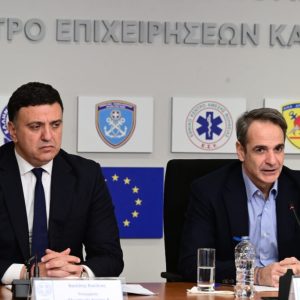
Prime Minister Kyriakos Mitsotakis is expected to travel to Santorini tomorrow, Friday (07/02), accompanied by the Minister of Climate Crisis and Civil Protection Vassilis Kikilias.
Let us add that the Greek government is currently the target of many attacks, 2 years after the train tragedy that left more than 50 dead. It is accused of having concealed facts, of avoiding any search for truth and political or other responsibility. Large demonstrations took place 2 weeks ago throughout Greece to protest against this situation.
Caution is therefore required at the moment, we must restore a little the image of a responsible government involved in the security of all citizens!
BREAKING NEWS 04/02/25:
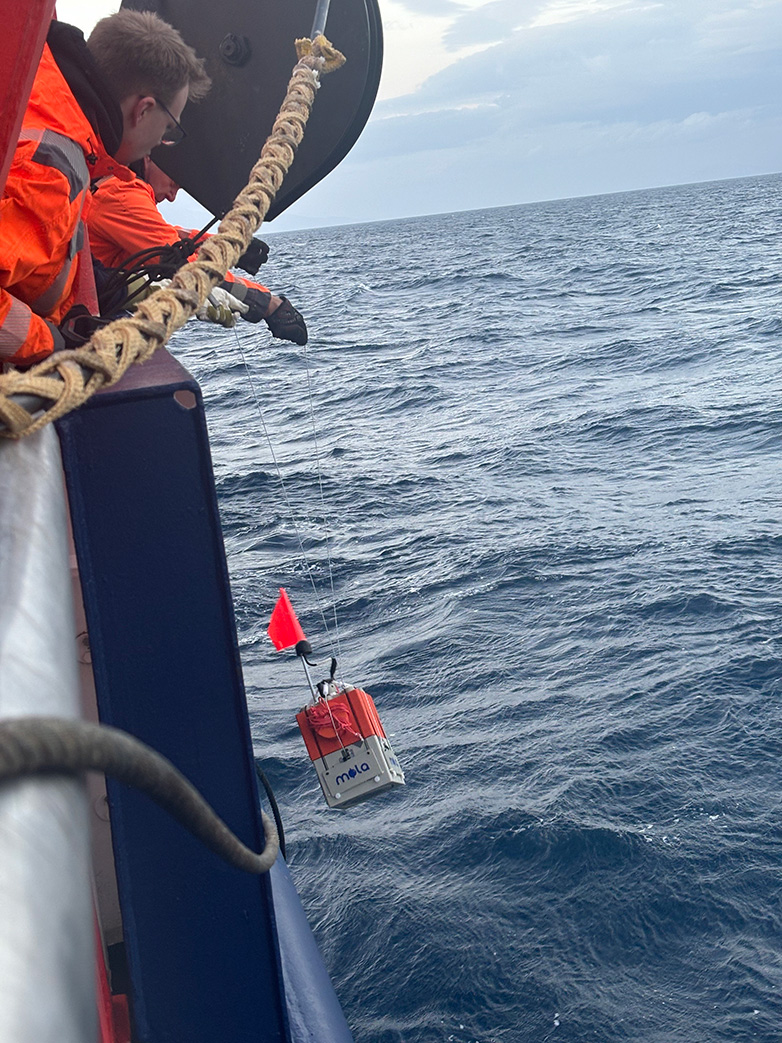
Thousands of permanent residents have left Santorini in the last 48 hours. This is not an evacuation, but voluntary departures facilitated by the establishment of additional ferries and flights. As is often the case, we are now witnessing a scientific debate between specialists, so the most urgent thing is to wait a little longer in order to have more details on the concrete analyses in progress. Thus, four portable underwater seismographs of new technology that will study the submarine volcano of Columbo near Santorini are being installed today, Tuesday 4 February, inside the Columbo caldera and next to the submarine fault of Anydros, by an international team of researchers, which includes scientists from the GEOMAR Oceanographic Research Center, the Helmholtz Institute in Kiel and the University of Potsdam, as well as the professor of geological oceanography of the Department of Geology and Geoenvironment of the National University of Athens, Evi Nomikou.
The international research team is in Santorini to participate in the MSM132 oceanographic mission, which aims to explore the underwater volcanic centers of Santorini and understand the geological processes occurring there.
These underwater seismographs are equipped with special sensors to measure the microseismicity of the area, ground movements and physicochemical parameters of the water. This was preceded by the installation last December of three other underwater seismographs inside the Columbo crater and five in the sea area of Columbo and the Anydros fault.
The choice of the area for the mission had already been made within the framework of the research project, as it is an area that has experienced many volcanic eruptions and seismic events in the past. However, the current situation will help scientists to have more scientific data.
« The research mission was planned, scientists working in the area are present and continuously analyze the data resulting from the seismic activity to inform the authorities and residents, » explains Evi Nomikou to APE-MPE.
These seismographs will remain in the underwater space for four days, then will be recovered to analyze the data. The survey will be repeated as long as the seismic activity continues.
« Our goal with these measurements is to collect data on the microseismicity of the area in a short period of time, which will be combined with land seismographs, so that we have better results in the analysis of earthquakes, » emphasizes Ms. Nomikou.
At the Ministry of Climate Crises and Civil Protection, the new inter-ministerial meeting has been finalized, for better coordination between the organizations and forces participating in the operational plan. The meeting brought together representatives of ten ministries, senior officers of the armed forces and security forces, representatives of emergency medical services, local government, the chairman of the Earthquake Protection Organization, professor of geology and natural disaster management Efthimios Lekkas and other seismologists. « The good scenario that everyone hopes for is an earthquake – which will also be considered the main earthquake – in the range of 5 to 5.5 R that will not cause significant damage, so that the phenomenon can be defused, » Lekkas stressed. The meeting, which is scheduled to take place again tomorrow, aims to assess the new data.
THE MOST IMPORTANT SO FAR: no injuries, no dangerous panic movements, no damage, and enormous precautions that reassure reasonable and rational people.
BREAKING NEWS 03/02:
It is indeed tectonic faults that are at the origin of the many earthquakes that have shaken Santorini and the neighboring islands. The epicentres are located between Amorgos and Santorini, all around the uninhabited islet of Anydros.
All attention is of course focused on the island of Santorini, because between 16 and 20,000 permanent residents live there, often in old homes. The worldwide notoriety of this island greatly increases the media echo.
Immediate reactions and rumours unfortunately prevail over caution and hindsight. What we must remember today is the speed with which the local authorities reacted as soon as alarms were detected. Teams are already on site, emergency medical equipment, schools will be closed as a precaution until Friday. Greece has some of the best seismologists in the world. They have a long experience coming from the fact that this country is shaken almost daily by earthquakes of varying strength. All are « on deck » and in an emergency situation. It takes time and a lot of analysis for the first conclusions to be drawn: are these tremors aftershocks, or do they announce a larger earthquake.
Here is the last comment from Professor Efthimis Lekkas, Chairman of the Department of Geology and Geo-Environment: « The seismic activity that is currently developing near Amorgos will last from a few days to a few weeks, maintaining the same magnitudes. It takes thousands of years to fill the fault. It will not produce very large earthquakes. « People should not panic, we will not see an earthquake like the one in 1956. »
Jean-Marie, fondateur et directeur d’OREA Voyages a par ailleurs été interrogé sur les questions que soulèvent ces seïsmes à Santorin sur l’activité touristique dans cet article du Dauphiné .
Dans tous les cas n’hésitez pas à nous contacter si vous avez déjà réservé votre voyage en Grèce avec nous pour 2025 et si vous avez des questions à ce sujet !